Dry Needling Is Acupuncture: Why Language, Training, and Scope Matter
When patients see dry needling listed as a service, it often sounds new, cutting-edge, modern, and completely separate from acupuncture. But the truth is this: Dry needling is not a separate medical system. It is one technique within acupuncture, renamed and repackaged and that distinction matters.

Acupuncture is a treatment modality within East Asian medicine—a complete and comprehensive medical system with thousands of years of clinical application. It involves the use of solid filiform needles inserted into specific locations on the body to support regulation, healing, and physiological balance. From a modern biomedical perspective, acupuncture is best understood as a targeted neurophysiological intervention. The insertion of a needle creates a controlled mechanical stimulus that interacts with peripheral nerves, connective tissue, and local immune cells. That stimulus sends signals through the nervous system, influencing pain processing, muscle tone, circulation, hormonal signaling, and stress regulation.
Research has demonstrated that acupuncture can:
Activate central and peripheral nervous system pathways through afferent nerve signaling.
Stimulate endogenous pain-modulating substances such as endorphins and enkephalins.
Modulate the hypothalamic–pituitary–adrenal (HPA) axis and stress hormone output.
Improve local circulation and influence inflammatory signaling.
Affect connective tissue, fascia, and neuromuscular pathways.

In other words, acupuncture is not about vague concepts or abstract balance. It is about precise stimulation of anatomical sites producing measurable physiological effects, supporting pain relief, tissue repair, nervous system regulation, and functional balance. What is often misunderstood is that acupuncture is not a single technique. It encompasses many distinct needling methods, selected based on diagnosis, clinical presentation, and treatment intent.
Examples include:
Trigger-point needling, often marketed as “dry needling,” used to stimulate dysfunctional muscle fibers and neuromuscular junctions
Shallow or distal needling techniques, used to influence autonomic and central nervous system regulation in conditions such as anxiety, insomnia, PTSD, and chronic stress
Reproductive and fertility protocols, used alongside IVF to support uterine and ovarian blood flow, neuroendocrine signaling, and stress-related cortisol regulation
Electroacupuncture, in which electrical stimulation enhances neuromuscular activation and pain modulation

These approaches are not fringe or experimental. They are increasingly supported by clinical research and integrated into multidisciplinary care settings. The World Health Organization recognizes acupuncture as effective for a growing number of medical conditions. The issue arises when one isolated technique, most commonly trigger-point needling, is removed from the broader medical system of acupuncture, rebranded as “dry needling,” and performed without the diagnostic framework, clinical reasoning, or depth of training that acupuncture education requires. At its core, this is about patient education and informed choice.
If you are allowing someone to place a needle into your body, you deserve to know:
What technique is being used
Why it is being used
And how much formal training your provider has received
Language Matters: How Terminology Shapes Understanding
Much of the confusion surrounding acupuncture and dry needling stems not from differences in tissue, technique, or outcomes but from language. East Asian medicine is the complete medical system. Acupuncture is one modality within that system. Within acupuncture, there are multiple needling approaches.
Translating the Terms Across Systems
Acupuncture
A therapeutic modality within East Asian medicine using solid filiform needles to influence physiological function, pain, and tissue behavior guided by comprehensive diagnostic frameworks and modern clinical understanding.
Dry Needling
A Western biomedical term describing the insertion of a solid filiform needle into painful or dysfunctional muscle tissue. This technique has existed within acupuncture for thousands of years and is traditionally referred to as Ashi point needling.
Trigger Points
The Western biomedical term for tender, palpable areas in muscle that reproduce pain or refer symptoms when stimulated. These are clinically identical to Ashi points, which are located by palpation and patient response rather than fixed charts.
In East Asian medicine, Ashi loosely translates to “that’s the spot.” The practitioner finds the point by feel. The patient confirms it by sensation. The needle does the work.
Different language.
Same tissue.
Same tool.
“Dry” vs. “Wet” — A Linguistic Distinction
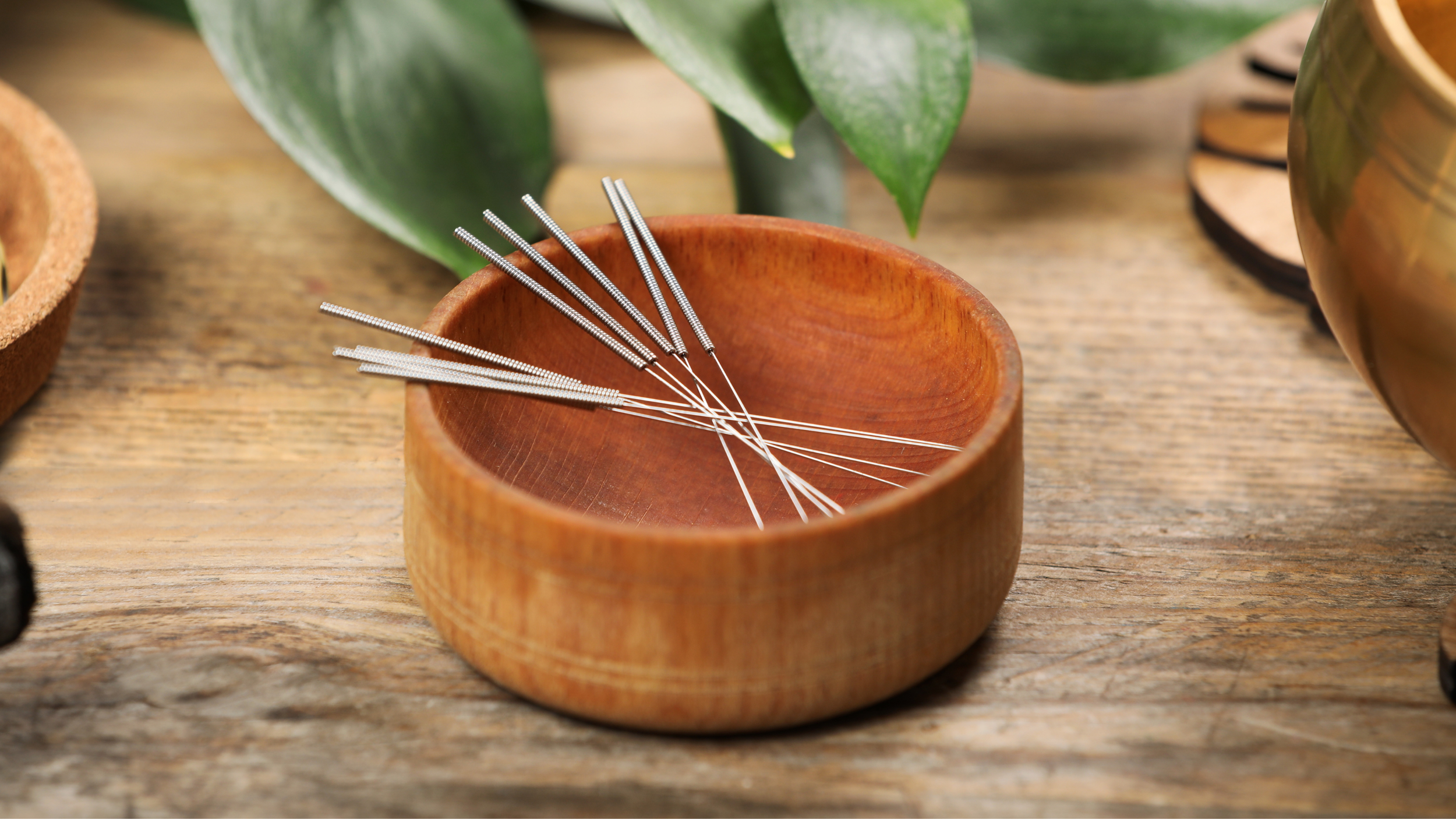
The term dry needling implies a contrast but not one that applies to acupuncture. All acupuncture needles are solid filiform needles. They do not introduce substances into the body. In that sense, all acupuncture needling is inherently “dry.” The only true counterpart to a “wet” needle is an injection needle, which introduces medication or fluid into tissue. There is no “wet acupuncture.” The distinction is linguistic not technical.
Same Needle, Same Tissue: Dry Needling vs Ashi-Point Acupuncture
From a mechanical and physiological standpoint, inserting a solid filiform needle into soft tissue whether described as a trigger point or an Ashi point, produces the same type of tissue stimulation. There is no unique physical effect that dry needling produces that Ashi-point acupuncture does not.
Studies comparing trigger-point acupuncture and other acupuncture approaches show that both:
Target tender, dysfunctional tissue.
Elicit comparable local muscle responses.
Modulate nociceptive and neurological signaling.
Influence connective tissue and neuromuscular tone
Any distinction between the two is not based on how the needle interacts with tissue, nor on a unique mechanism of action.
The needle is the same.
The tissue response is the same.
The clinical effect is the same.
What differs is clinical framing and intent, not mechanics. Reframing an established technique in new language does not alter the underlying physiology.

Training Matters: Education, Competence, and Reality
Licensed acupuncturists are the only healthcare practitioners whose primary medical education is centered entirely on needlework generally around 2700 hours. Acupuncture is not an adjunct skill layered onto another profession—it is the core clinical competency taught, practiced, and assessed throughout formal training.
By contrast, dry needling is introduced as a post-graduate technique within other healthcare fields basically equivalent to an “add on”. Required training generally ranges from zero to approximately 150+ hours, often completed through short, intensive certification courses sometimes equivalent to a weekend seminar. While some clinicians pursue additional mentorship beyond minimum requirements, dry needling instruction is typically brief and technique-focused when compared to comprehensive acupuncture education.
This raises an unavoidable question: Would you feel comfortable receiving acupuncture from a practitioner whose only training consisted of a weekend certification? Would you feel comfortable receiving physical therapy or chiropractic care from a practitioner who only studied for 100 hours? If not, why should that standard be acceptable simply because the technique has been renamed? In short:
All dry needling is acupuncture.
Not all acupuncture is dry needling.
The Real Origins of Dry Needling
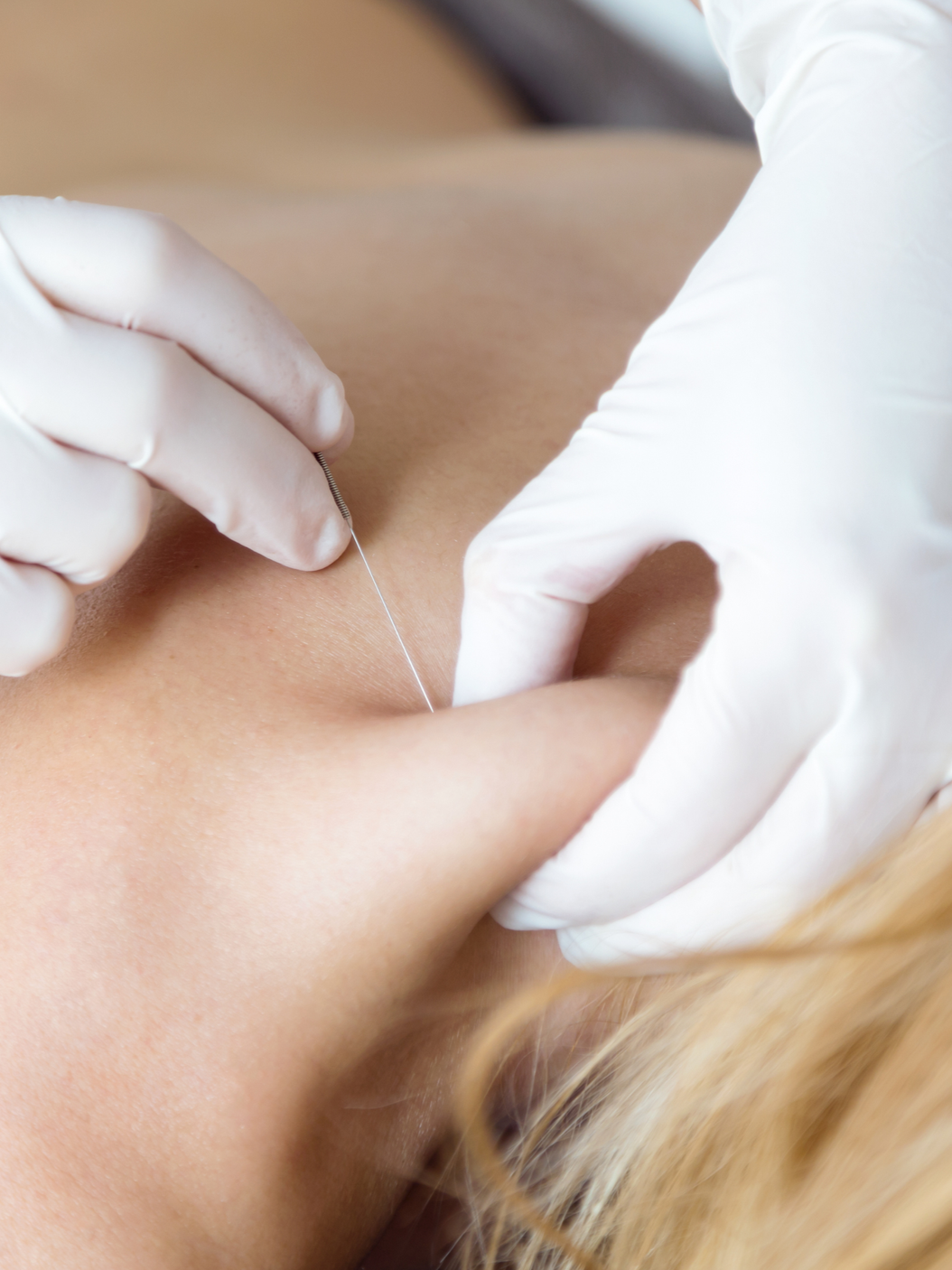
The term dry needling did not originate within physical therapy, nor did it originally involve filiform needles. Its earliest documented use is attributed to Dr. Janet G. Travell (1901–1997), whose work on myofascial pain gained prominence in the 1940s and 1950s. Dr. Travell treated trigger points using hypodermic needles. When she inserted a hypodermic needle without injecting a substance, she described the technique as dry needling, distinguishing it from wet needling, which involved anesthetic injections. In this context, “dry” meant no injectate, not a different type of needle. This definition is documented in the myofascial pain literature and later consolidated in Myofascial Pain and Dysfunction: The Trigger Point Manual (Travell & Simons), first published in 1983. Modern dry needling no longer uses hypodermic needles. It uses solid filiform acupuncture needles. The instrument changed. The terminology remained. Changing terminology does not change the mechanism or the clinical act being performed.
Scope of Practice, Regulation, and Influence
Each State has different requirements and regulations for Acupuncture licensure. I believe this is a detriment to our profession and also feeds into the confusion. A nationwide standard would help create continuity. In any allied health profession there are practitioners that out pace their education. Just because you practice one doesn’t make you better by default. This is not a discussion about “better.”
Scope of practice is not determined by clinical outcomes alone. In many states, scope expansion is shaped by regulatory influence, legislative advocacy, and financial resources. Professions with greater access to lobbying power are often better positioned to redefine language, fund certification pathways, and advance statutory changes—regardless of whether training standards are equivalent.
If you’re a practitioner, this raises a broader and more important question:
If scope of practice can expand through rebranding and short-form certification, should that expansion apply equally across all allied health disciplines?
This reality does not invalidate interdisciplinary collaboration but it does demand scrutiny when scope expansion outpaces education. Consistency in scope determination protects patients, preserves professional integrity, and ensures that healthcare standards are guided by competence rather than terminology or influence.
A Matter of Honesty and Patient Protection
This discussion is not about professional rivalry or restricting care. It is about honesty. It is about clarity. And it is about patient safety. Patients deserve to know who is inserting needles into their body, what training that practitioner has received, and whether the technique being used comes from a comprehensive medical system or a narrowly trained procedure. It also opens up dialogue about expanding scopes across the board.
Clear language supports informed consent.
Clear standards protect public trust.
And accurate attribution protects both patients and professions.

Julia T. King
Acupuncture Physician
Emerge Acupuncture & Wellness
References
Travell, J. G., & Simons, D. G. Myofascial Pain and Dysfunction: The Trigger Point Manual. Williams & Wilkins, 1983.
World Health Organization. Acupuncture: Review and Analysis of Reports on Controlled Clinical Trials.
NIH Consensus Development Panel. Acupuncture. JAMA.
Langevin, H. M., et al. “Mechanical signaling through connective tissue.” FASEB Journal.
Florida Board of Acupuncture. Licensure standards and scope definitions.
Florida Department of Health. Professional regulation and scope-of-practice frameworks.