You did everything they told you. You cut the eggs. You switched to egg whites, then to oatmeal, then to the "heart healthy" margarine. And your cholesterol came back higher.
That isn't a willpower problem. It's a math problem nobody explained to you.
Your liver makes most of it
About 80% of the cholesterol in your blood is made by your own liver. Only about 20% comes from what you eat. So when the plan is "eat less fat," we're working on the small side of the equation and wondering why the number won't move.
And here's the part that gets lost: you need cholesterol. It builds your hormones. It builds your brain. It's in the wall of every cell you have, and it makes the bile that digests your food. Cholesterol isn't the enemy.
The real question is whether your liver can make the right amount and clear the extra. When it can't, cholesterol climbs, no matter how clean you eat.
Two ways of seeing the same problem
Functional medicine reads high cholesterol as a signal from the terrain: the liver, inflammation, blood sugar, metabolism. When we fix the terrain, the numbers follow.
Chinese medicine has been describing this for a very long time. The body isn't clearing its "turbidity." The Liver and Spleen can't transform it and move it along, so it stalls as phlegm, dampness and blood stasis. Our job is to get it moving again.
Both lenses point to the same place. Treat the cause, not the number.
Looking deeper than the standard panel
A standard cholesterol panel tells you totals. It doesn't tell you the two things that matter most.
How much is actually circulating. Total LDL is a weight, not a count. What drives risk is the number of particles carrying cholesterol through your bloodstream. We can test that directly with ApoB and LDL particle number, so we know whether a "high" number is a real problem or just a big number.
Whether it runs in your family. Some high cholesterol is genetic, and no diet will touch it. Lipoprotein(a), Lp(a), is an inherited marker most people have never had checked. If yours is high, that changes the plan, and it's something your kids and siblings should know too.
These are the labs that tell us what we're actually treating.
One pattern we look for first: insulin resistance
Here's one that surprises people. Sugar can raise your cholesterol number.
When your cells stop listening to insulin, your body keeps pumping out more of it. High insulin tells the liver to turn extra sugar into fat and ship it out into the blood as triglycerides. It also switches on the liver's own cholesterol-making enzyme, the same one statin drugs block. The result: higher triglycerides, more small LDL particles, lower HDL, and a cholesterol number that climbs even when you've cut the fat.
So we check fasting insulin, A1c and your triglyceride to HDL ratio alongside your lipids. If blood sugar is driving it, the fix is blood sugar, and the cholesterol often comes down with it. This is how we read the smaller patterns underneath the big number.
No two people run high for the same reason
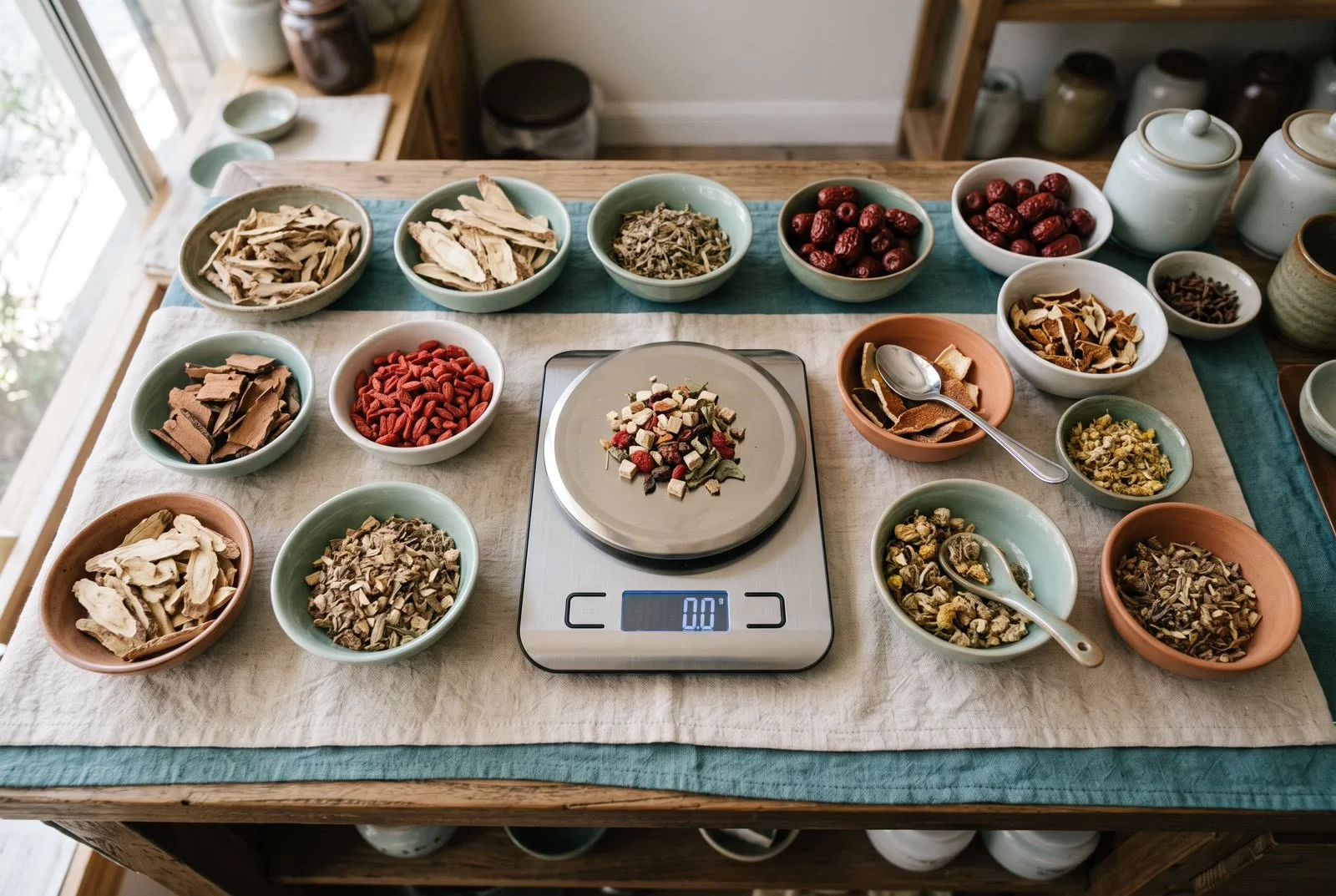
Your neighbor's high cholesterol and yours may have nothing in common. One person's is driven by blood sugar, another's by a sluggish liver, another's by inflammation or stress. In Chinese medicine, those are different patterns, and each one gets a different treatment.
So we don't hand out one product. We have several herbal formulas, and we customize yours to your specific pattern, your differential diagnosis, based on your labs, your history and what we see in your body. Herbs are combined and adjusted to work together, and we change the formula as you change.
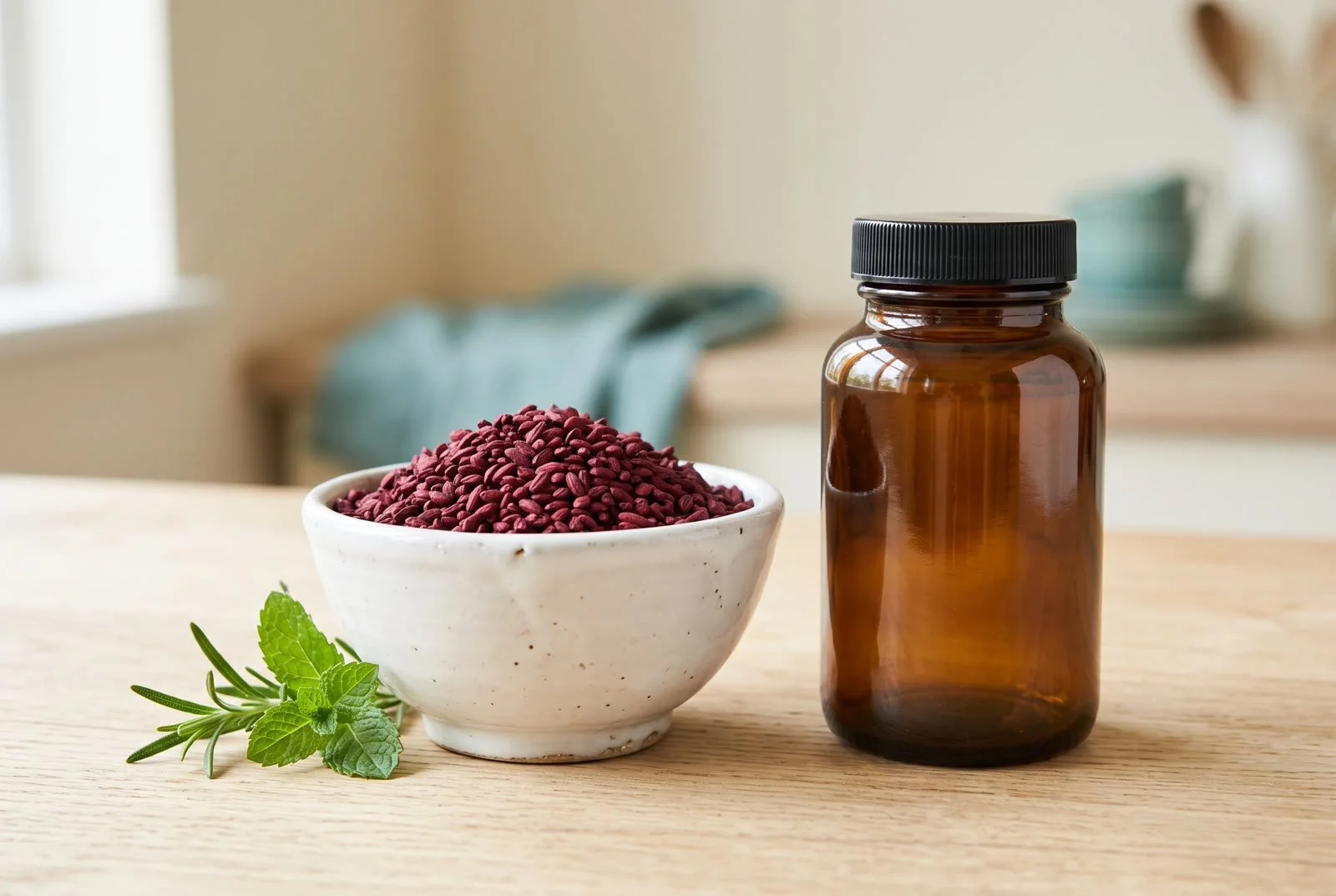
Red yeast rice can be added to a formula for extra LDL-lowering support. It's the natural compound behind China's most studied lipid therapy.
"Can't I just buy red yeast rice at the store?"
It's tempting. But on its own, red yeast rice treats the number and leaves the cause alone, and store-shelf quality is a real problem. Some cheap products have been found contaminated with citrinin, a mold byproduct, and some have wildly inconsistent strength. That's why we use only GMP-certified, third-party-tested, practitioner-grade red yeast rice, screened citrinin-free and standardized for potency, and only as one part of a formula built for your pattern.
Real outcomes, not just prettier labs
This isn't folklore. In a landmark Chinese study, close to 5,000 people who had already had a heart attack were followed for about four and a half years. The group taking a standardized red yeast rice extract had significantly fewer repeat heart attacks and deaths. That's an outcomes trial, which is rare for any natural therapy. It measured the thing that actually matters, not just a lab value.
Doing it safely
Red yeast rice works through the same pathway as statin medications, so the two aren't taken together. If you're on a statin now, we go over it first, which one and what dose, and decide the right approach together. We check liver enzymes along the way, and it isn't used during pregnancy.
Ready to treat the cause?
If your number keeps climbing and nobody has asked why, let's ask. Book a functional consult. We'll read your labs, find your root pattern, and build one plan that fits you.